How HEAT works
HEAT estimates the health impacts and economic value of regular walking and cycling by comparing different levels of active travel.
User inputs
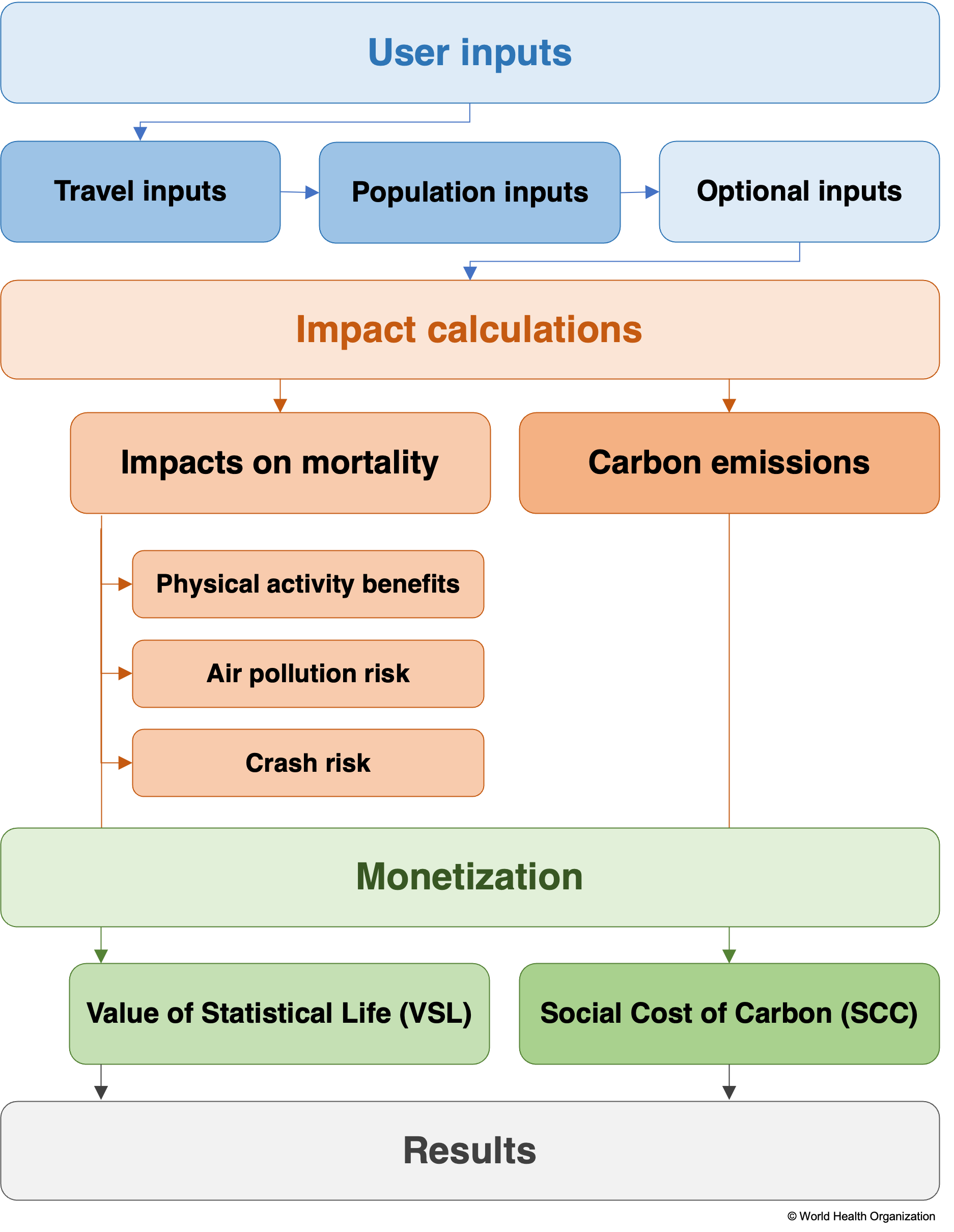
HEAT combines travel and population data with evidence on the long-term effects of walking and cycling.
Impact pathways
It covers four impact pathways:
- Physical activity: mortality benefits from regular walking and cycling.
- Air pollution: mortality risks from exposure while walking and cycling.
- Traffic crashes: mortality risks for people walking and cycling.
- Carbon emissions: changes when active travel replaces motorized trips.
Scenario comparisons
HEAT compares a reference case with a comparison case to estimate the change in premature deaths.
- Single-case assessment: compare one level of walking or cycling with a situation without that activity.
- Two-case assessment: compare two specified situations, such as current travel and a future scenario.
The difference between the cases shows the estimated impact of the change.
Watch this short video tutorial to learn on the different steps when applying the tool.
Explore more details on the calculations, economic valuation and results below. For more information on the underlying methodology see Comprehensive HEAT methodology.
HEAT impact calculations
Explore how HEAT estimates the impacts of physical activity, air pollution, traffic crashes and carbon emissions.
Economic valuation
Learn how HEAT assigns an economic value to health impacts and changes in carbon emissions.
Interpretation of results
Understand HEAT results and what they mean for your walking and cycling assessment.